
Natalie Thomas wasn’t sure what a master’s degree was until she got her bachelor’s but always knew she wanted one for as long as she could remember.
Her future career path required her to get a master’s, and that solidified her stance, Thomas, a political science graduate student at the University of Texas at Arlington said.
There has been a consistent rise in education level since the year 2000, the United States Census Bureau reported.
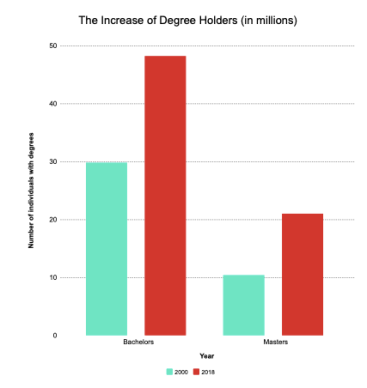
Thomas is a part of the 13.1 percent of adults in the U.S. with an advanced degree and one of many who got her master’s for the betterment of her career.
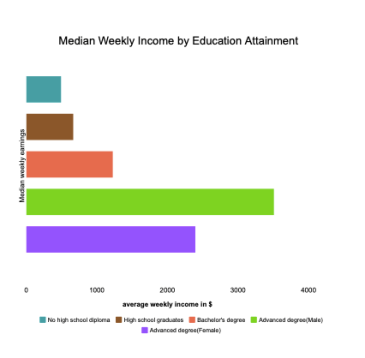
According to the Bureau of Labor Statistics, the median weekly earnings have been consistently higher for individuals with masters or professional degrees in comparison to those with a bachelor’s or a high school diploma.
“Don’t ever take a job for the money, that’s a recipe for disaster,” UTA Graduate Advisor Scott Hanson said.
Money shouldn’t be the only thing to be considered when looking into graduate school, he said.
Do it for the right reasons
Hanson said many continue their path to graduate school as a result of not finding a job. He tries to let students know that graduate school isn’t a place to hide from the real world.
UTA Graduate Advisor Karolyn Fields said many wanting a bachelor’s degree already know what they want to do with it. Many are already in the workforce and realize they need a higher qualification for the next promotion or job they want, she said.
“I would tell anyone on the fence to look up job postings for their ideal position and see the requirements and pay to figure out what will be expected of them,” Thomas said.
Hanson said it’s important to consider different factors while considering graduate school including the opportunities within the program, graduation rates, starting salaries and job titles that come after it.
Graduate school is for people who are curious, persistent and keen on knowing how things work, he said.
Knowing the difference between a master’s and a bachelor’s degree
A master’s program is a lot more research than an undergraduate and a different kind of training compared to an undergraduate program, Fields said.
Thomas said she read about 300 pages a week, was expected to digest and understand all that material and be able to discuss it in class for three hours.
“People who don’t like being in class or who skip a lot should definitely not consider it, since classes are just once a week, missing one can set you back significantly,” Thomas said.
In comparison to undergraduate education, the readings are more in-depth and the professor lecture less and the students are expected to lead the discussions, she said.
“I wouldn’t recommend grad school to everyone the same way I wouldn’t recommend college to everyone. It’s totally possible to excel without it, but if you can do it you should,” Thomas said.
Hanson said with having a bachelor’s versus a master’s means starting off on different levels in the company.
Companies usually spend three years training undergraduate recruits before they become productive to the company, while hiring someone with a master’s degree means offering higher pay but skipping the training and investing in someone, he said.
“But just having the skill set, starting at a different level in the company with a different voice, a different role and those things help your career progress more quickly,” Hansom said.
Do you really need it?
“A lot of my students are firefighters and policemen and sometimes they run into a wall in terms of promotions and come back to get a master’s so they can move forward in their career,” Fields said.
Fields advises students not to waste time or money without having a specific goal. Graduate school isn’t like undergraduate where you explore what you like, she said.
Hanson said he doesn’t believe a degree is right for everyone, because society sold this idea that everyone needs one which devalued a college degree.
A master’s degree is for those looking to branch out a little bit on what they’re doing and won’t be able to do that without one, Fields said.
“So I say figure out what you want to do, and that will change over the course of your lifetime,” Hanson said. “Figure out what you want right now and go and do that.”
 Keyuri Parab